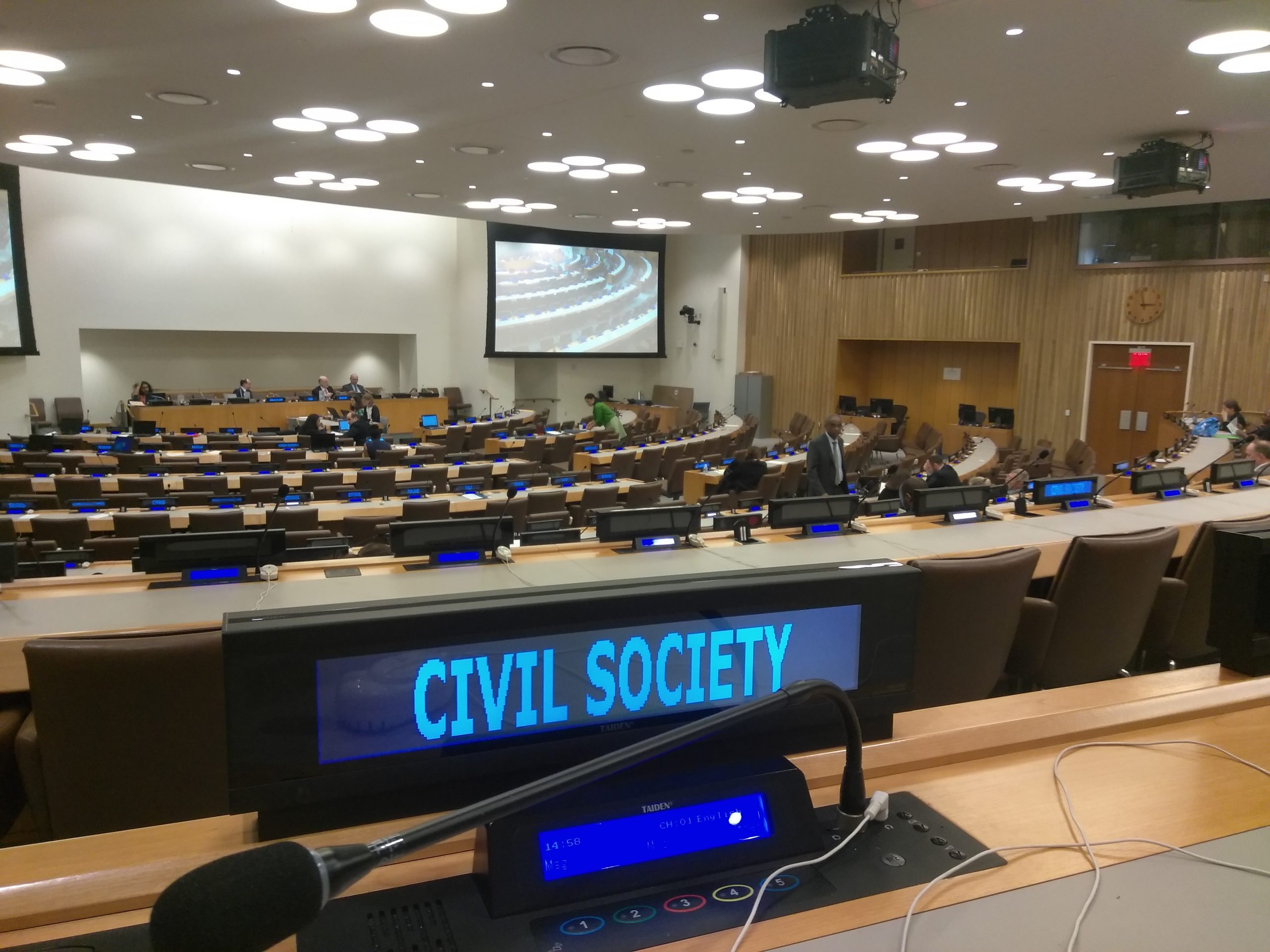
The second 2018 session of the NGO Committee had barely started before China took the floor to make unfounded accusations of terrorism against Uighur human rights defender Dolkun Isa, and to seek to expel NGO ‘Society of Threatened Peoples’ (STP) from the UN.
The Economic and Social Council (ECOSOC) NGO Committee considers applications for accreditation, as well as the suspension and withdrawal of such consultative status. ECOSOC accreditation provides NGOs with opportunities to access UN spaces and, in some cases, make oral statements and organise events.
China sought the withdrawal of ECOSOC accreditation from the Society of Threatened Peoples (STP) on the basis that it had enabled Isa – who they accused of terrorism – to participate in the 2018 Permanent Forum on Indigenous Issues (UNPFII). China had made every effort to deny Isa’s entry into the Forum – unsuccessfully– and in 2017 had him expelled from the Forum despite his registration for the event.
At the NGO Committee session, several States, including Germany and the US, made strong statements rejecting China’s accusations, but Isa himself was not given an opportunity to respond. With the Committee session webcast live, the accusations made against him during the session were widely disseminated.
‘We’ve now seen several cases in the NGO Committee or ECOSOC where an individual or NGO is accused of being a ‘terrorist’ as an apparent means to punish them and, in the case of accredited NGOs, seek to expel them from the UN’, said ISHR’s Eleanor Openshaw. ‘In most cases they are not provided the opportunity to respond’.
China ultimately withdrew its attempt to secure the withdrawal of STP’s accreditation, but noted that its original position – including its accusations against Isa – ‘remains unchanged’. It also stated that it would ‘closely monitor STP’s activities in the UN including in the Human Rights Council’ to ensure, amongst other things, it ‘refrain from appointing any terrorist as its representative.’
‘The Society for Threatened Peoples was effectively put on notice, as was any organization that might look to ally itself with an individual China may call a ‘terrorist’’, said Openshaw.
Following the decision, STP’s Director Ulrich Delius said, ‘(t)he influence of authoritarian states in the world organization continues to grow. Non-governmental organizations must not be silenced just because they draw attention to serious human rights violations’.
These threats against Isa and intimidation of STP are simply the latest in Committee practice that has prompted concern by NGOs, and calls for reform.
‘Clear principles and processes should underpin Committee practice to ensure that individuals and NGOs are never unduly maligned. These should include providing credible evidence in the case of accusations of terrorism’, said Openshaw.
‘The Chair of the Committee must take action. We call on him to make a statement to that effect on 11 June when the report of the most recent session of the NGO Committee is due to be adopted.’