
HRC37 | Egypt: Counter-terrorism measures should not be used to cover-up human rights violations
In Egypt, counter-terrorism measures are used as a cover-up for the ongoing human rights violations committed. These violations range from attacks against human rights defenders, freedom of expression, association and assembly, arbitrary detention, enforced disappearance, torture and violations of the most basic rights of all, the right to life.
Members of the Human Rights Council should uphold the highest standards in the promotion and protection of human rights and fully cooperate with the Council, as stated in its founding document, General Assembly Resolution 60/251. They should lead by example and expect their own human rights record to be subjected to particular scrutiny during their time as members.
In Egypt, a member of the Council until the end of 2019, counter-terrorism measures are used as an excuse to avoid scrutiny of ongoing human rights violations. These violations range from attacks against human rights defenders, freedom of expression, association and assembly, arbitrary detention, enforced disappearance, torture and violations of the most basic rights of all, the right to life.
Since December 2017, Egyptian human rights organisations have documented at least 39 executions and expressed their concern that the increase in executions comes as “a political response, following very recent armed attacks on civilians and military personnel on 28 and 29 December 2017.” The Special Rapporteur on the protection of human rights while countering terrorism explained that “there is a lack of persuasive evidence that the death penalty could contribute more than any other punishment to eradicating terrorism”.
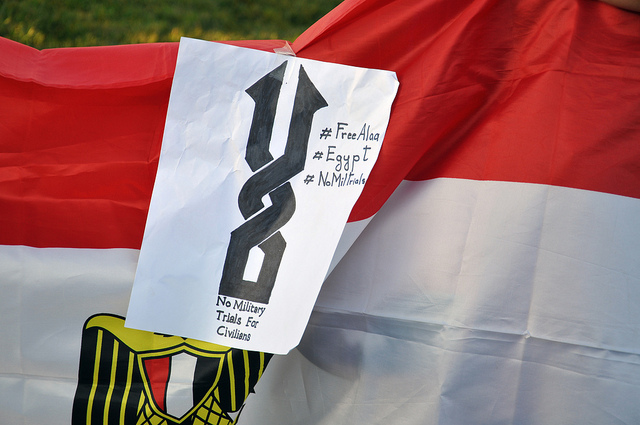
The majority of death sentences have been issued by military courts that do not meet the minimum requirements for fair trials. Last year, Egyptian civilian and military courts issued more than 350 death sentences. At least 32 individuals in eight different cases were forcibly disappeared.
Abdel-Bassir Abdel-Raof was enforcedly disappeared for 10 days, tortured and later sentenced to death by a military court. The court will hear his appeal on 26 March. His mother asked ISHR to share with the Council these words:
“I plead to the Council with my last ray of hope to stop the execution of my son, so that he can be tried before a civilian court, to achieve justice, because I’m confident in my son’s innocence”.
UN human rights experts have raised their concerns over the continuing pattern of death sentences handed out on the basis of evidence obtained through torture or ill treatment, often during a period of enforced disappearance. Regional and international human rights organisations have also highlighted the substantial escalation of the repression ahead of Egypt’s upcoming presidential elections on 26 March.
Yet, the Council has yet to act to address these systematic and gross human rights violations taking place in Egypt.
“The failure of the Council to address the human rights situation in Egypt has emboldened the authorities to continue to crackdown on fundamental freedoms”, said Michael Ineichen, ISHR’s Directory of Advocacy at the Human Rights Council. “This lack of scrutiny, especially for a Council Member, may undermine the credibility and legitimacy of the Council as a whole”, continued Ineichen.
During the Council’s ongoing 37th session, the Egyptian delegation has highlighted on several occasions the country’s combat against terrorism and claimed that the government is responsive to international human rights protection mechanisms.
The Egyptian government should live up to its statement and immediately respond to the pending visit requests by the Special Rapporteur on freedom of assembly, Working Group on disappearances, Working Group on arbitrary detention, Special Rapporteur on human rights defenders, Special Rapporteur on freedom of expression, Special Rapporteur on torture, Special Rapporteur on independence of judges, Special Rapporteur on human rights and counter terrorism, and the Special Rapporteur on extrajudicial, summary or arbitrary executions.
Finally, ISHR called on the Egyptian government to immediately impose a moratorium on the death penalty, refer all cases of civilians tried before military courts to the civilian judiciary and ensure the right of fair trial in accordance with international standards.
Read ISHR’s full statement delivered at the Council here.
Contact: Michael Ineichen [email protected]
Photo: Steve Rhodes (Flicker)