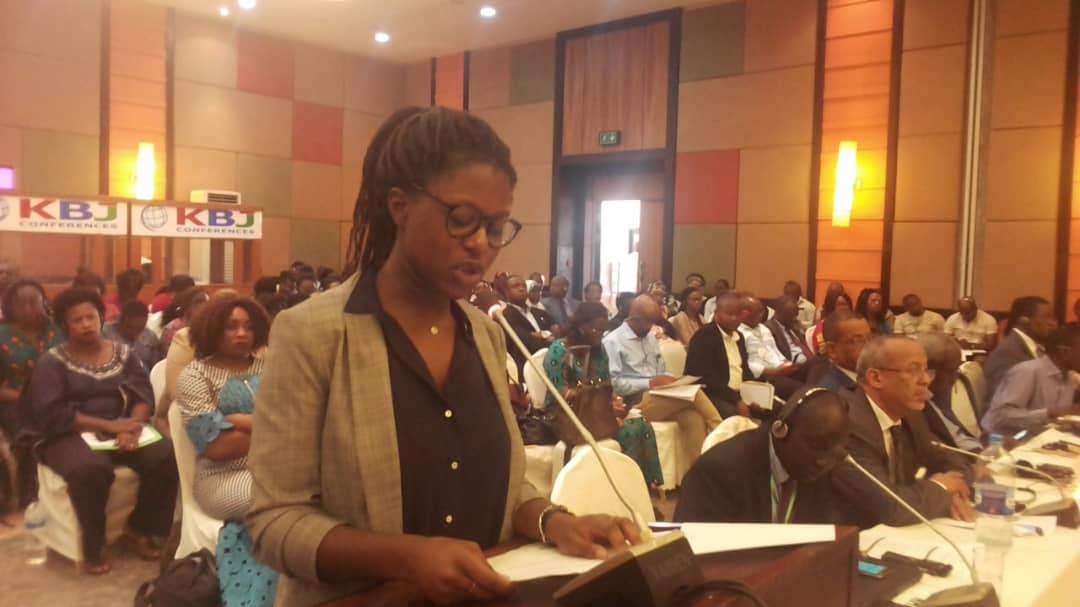
ISHR delivered its statement on the situation of human rights in Africa, with a particular focus on human rights defenders, on 25 October 2018. In this statement, ISHR’s Africa advocacy consultant Adélaïde Etong Kame commended the adoption of national human rights defenders laws by Côte d’Ivoire, Burkina Faso and Mali. Subsequently, she invited the African Commission to closely monitor the implementation process of these protection laws, especially during the review of the periodic reports of these countries and during the promotion and protection visits in these countries.
However, the statement noted that the situation of defenders in Africa remains of concern. Indeed, restrictions are imposed on the work of human rights defenders through the enactment of laws to control the funds they received, the adoption of anti-terrorism laws which limit the ability of the media and human rights activists to monitor and report on violence committed in the name of the fight against terrorism.
Additionally, the statement highlighted the cases of Burundi and the Democratic Republic of Congo (DRC). In Burundi, the government recently suspended all international non-governmental organisations, requiring them to sign documents imposing ethnic quotas and unjustified control on their finances. In the DRC, six draft bills related to freedom of the press, peaceful protest or non-profit organisations threaten the work of defenders. ISHR called on States to refrain from adopting restrictive laws.
Repression against defenders remains alarming, especially in Egypt where “prominent women human rights defenders continue to be harassed and submitted to arbitrary restrictions in the politically motivated ‘NGO foreign funding case’” said Etong Kame.
Finally, in light of the recent controversial decisions made, ISHR called on the African Union to ensure the independence of the Commission in order to guarantee an unrestricted engagement of the civil society with its mechanism.
Contact: Adélaïde Etong Kame, Africa Advocacy Consultant, [email protected]