Strategy 2030: ISHR’s new Strategic Framework
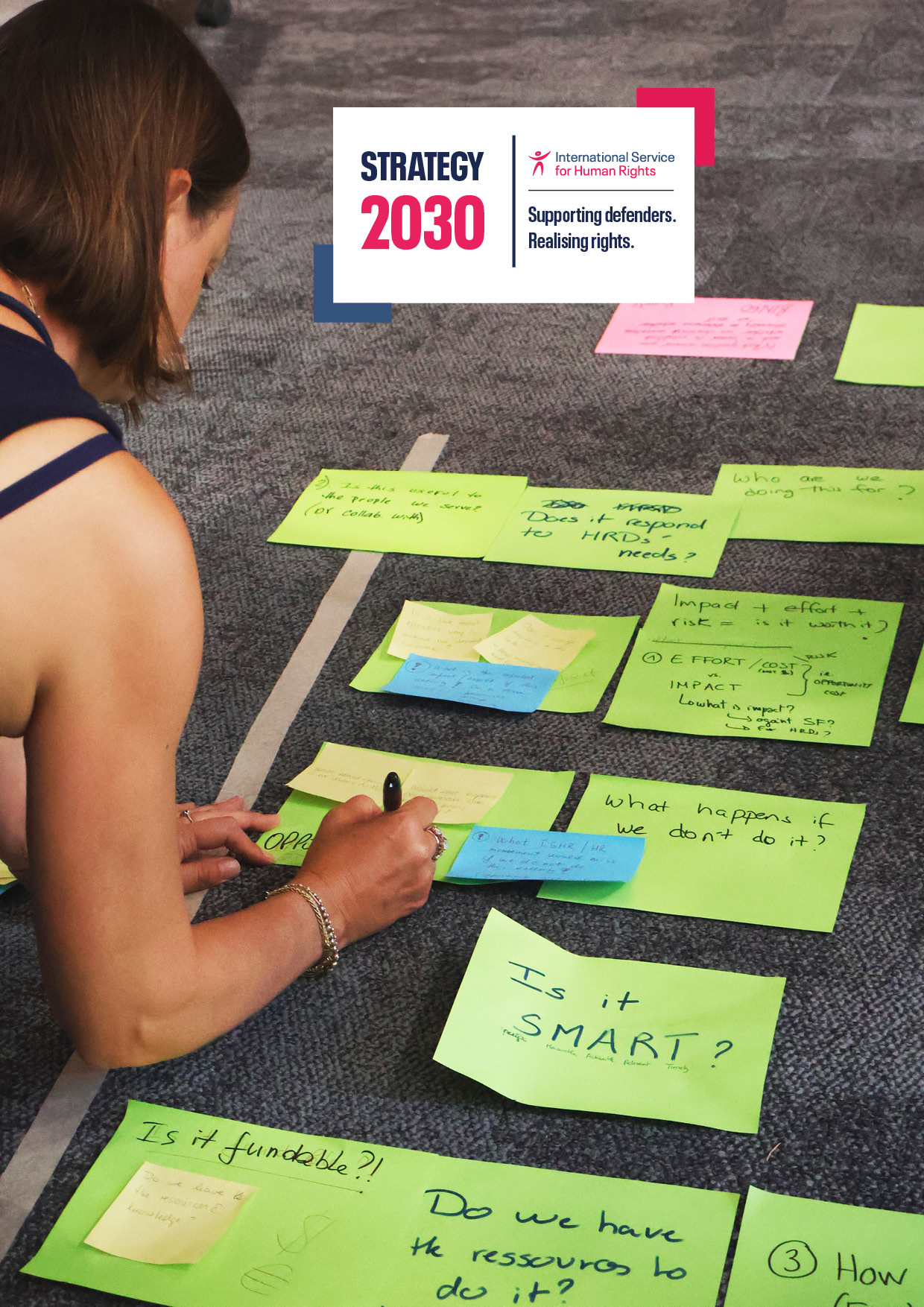
After extensive internal and external consultations, ISHR has just released its Strategy 2030, our new Strategic Framework.
ISHR provides both analytical and practical information to human rights defenders to strengthen their access to and engagement with human rights bodies and mechanisms at the international, regional and national levels.
After extensive internal and external consultations, ISHR has just released its Strategy 2030, our new Strategic Framework.
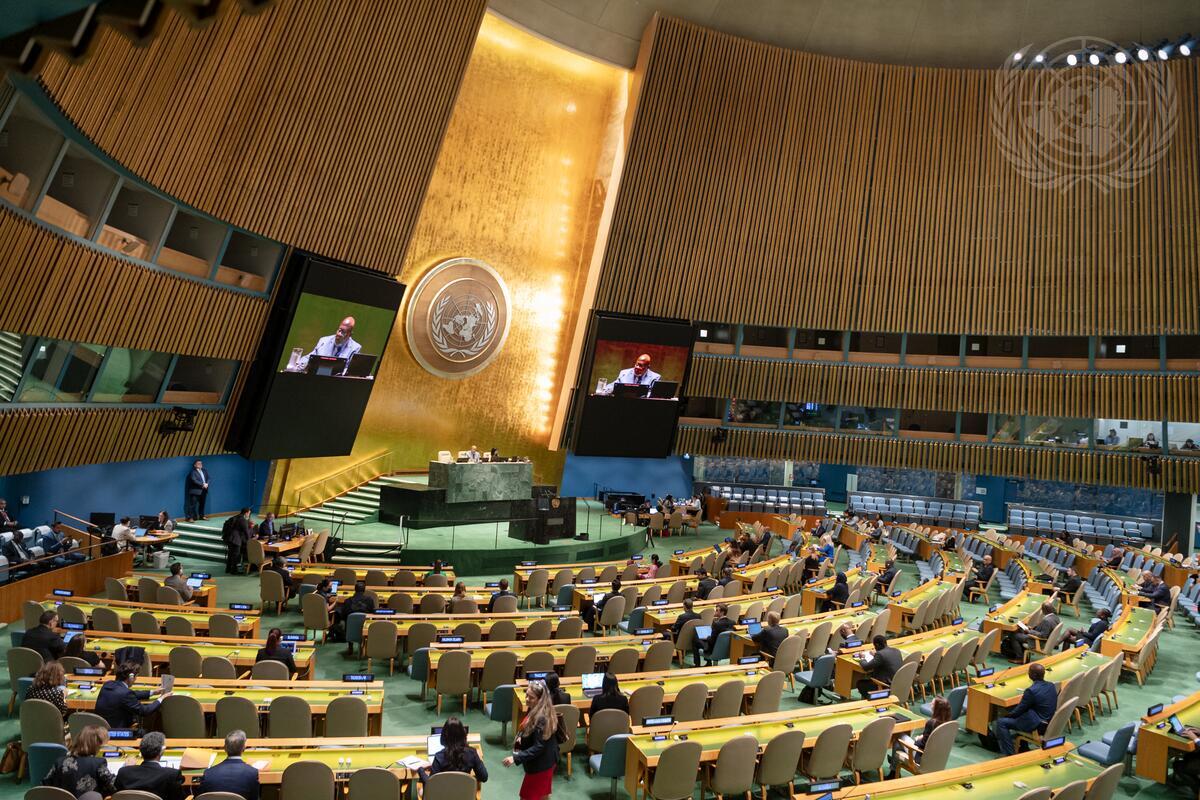
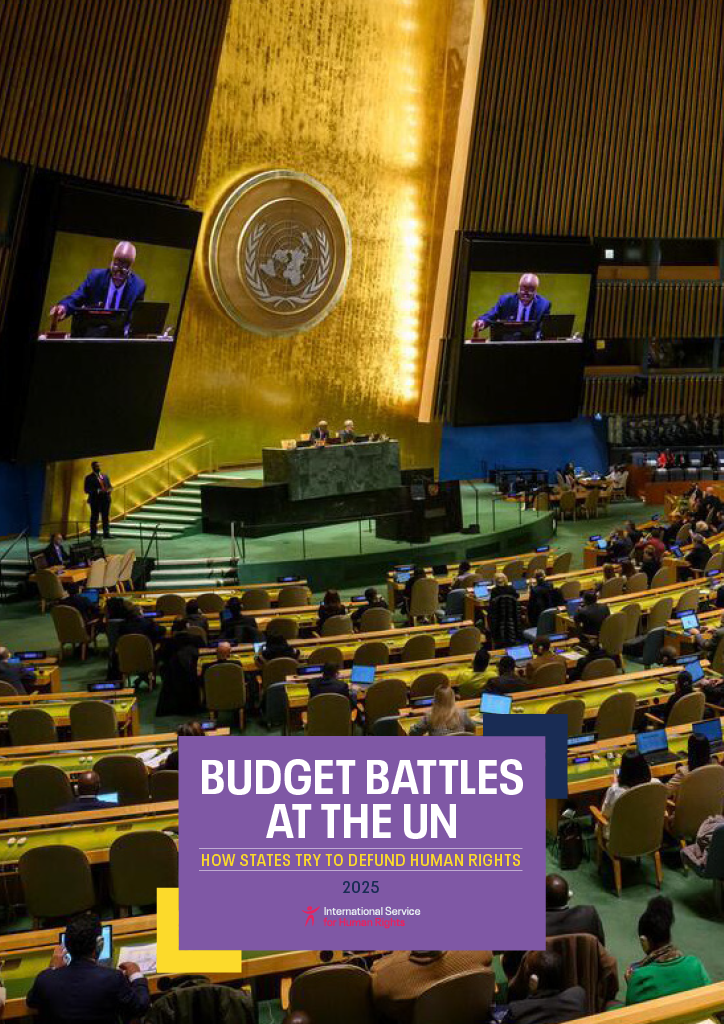
New ISHR report exposes how some States are manoeuvring to defund the UN's human rights work. The report documents coordinated efforts to block or cut funding for the Office of the High Commissioner for Human Rights (OHCHR) and Human Rights Council investigations, as well as inconsistent payments that have deepened the UN’s financial crisis.
A guide to using, building on, and amplifying the standards in the Declaration +25 to protect the right to defend rights.
This report summarises and assesses progress and challenges over the past decade in relation to business frameworks, guidance, initiatives and tools to protect human rights defenders that have emerged at local, national and regional levels.
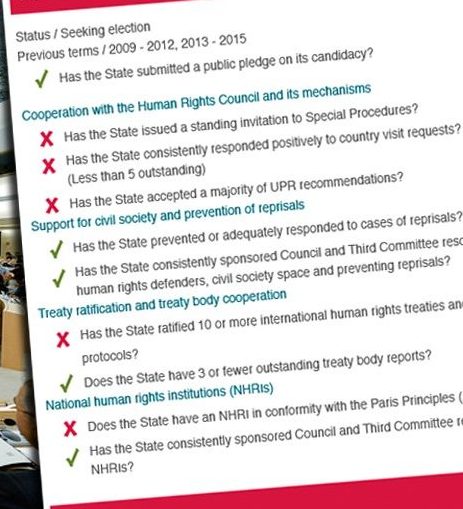
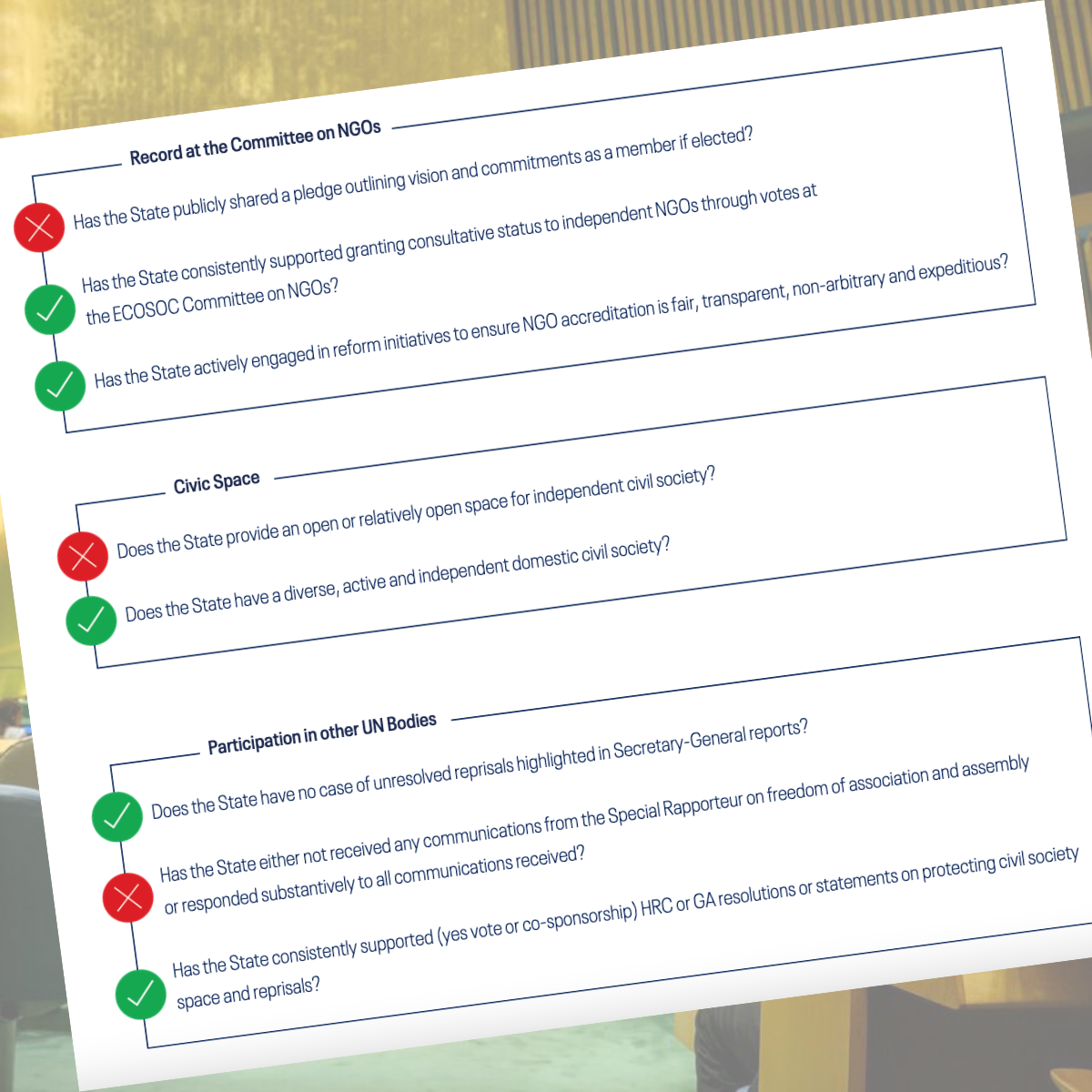
ISHR has published ‘scorecards’ for States seeking election to the UN Human Rights Council for 2026-2028 to help inform voting States’ decisions in the upcoming election.
ISHR is pleased to launch its updated Reprisals Handbook in four languages (five versions), an essential resource for all stakeholders concerned about intimidation and reprisals against those cooperating with international or regional human rights systems.
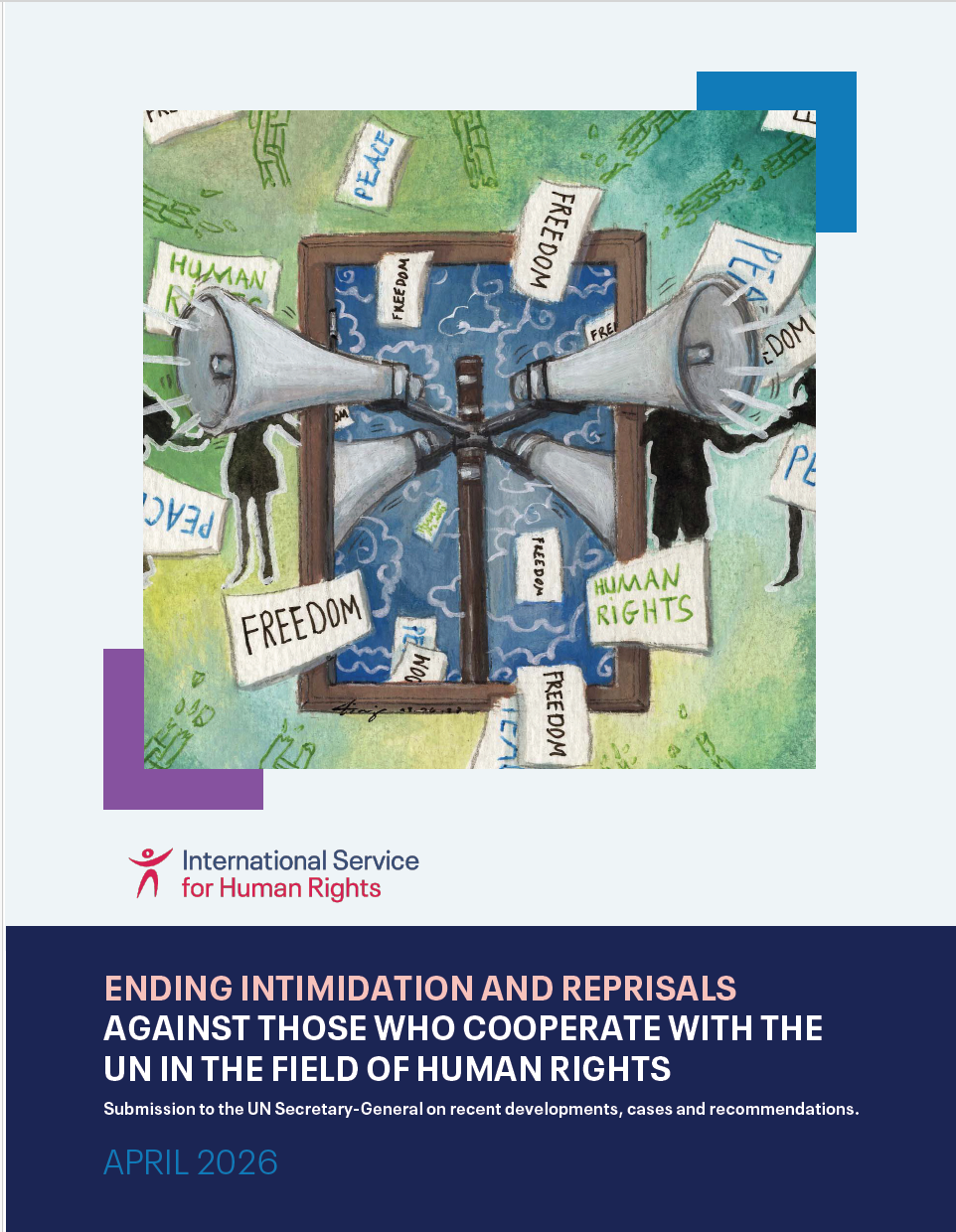
In response to the annual call for inputs from the UN Secretary-General, ISHR has submitted 120 cases of intimidation and reprisals against human rights defenders engaging with the UN from 29 countries.
This report sheds lights into the lived realities of human rights defenders in six often-overlooked countries in Africa: Cape Verde, Comoros, Madagascar, Mauritius, Sao Tome and Principe, and Seychelles.
In a new report, ISHR analyses China’s tactics to restrict access for independent civil society actors in UN human rights bodies. The report provides an analysis of China’s membership of the UN Committee on NGOs, the growing presence of Chinese Government-Organised NGOs (GONGOs), and patterns of intimidation and reprisals by the Chinese government.
The Road map for civil society engagement outlines a programme through which civil society organisations (CSOs) can maximise their impact while engaging with the African Commission for Human and Peoples' Rights through the State Reporting Procedure.