|
Formation annuelle sur le système international des droits de l'homme: candidatures ouvertes |
|
|
|
|
Last Updated : Tuesday, 17 November 2009
|
|
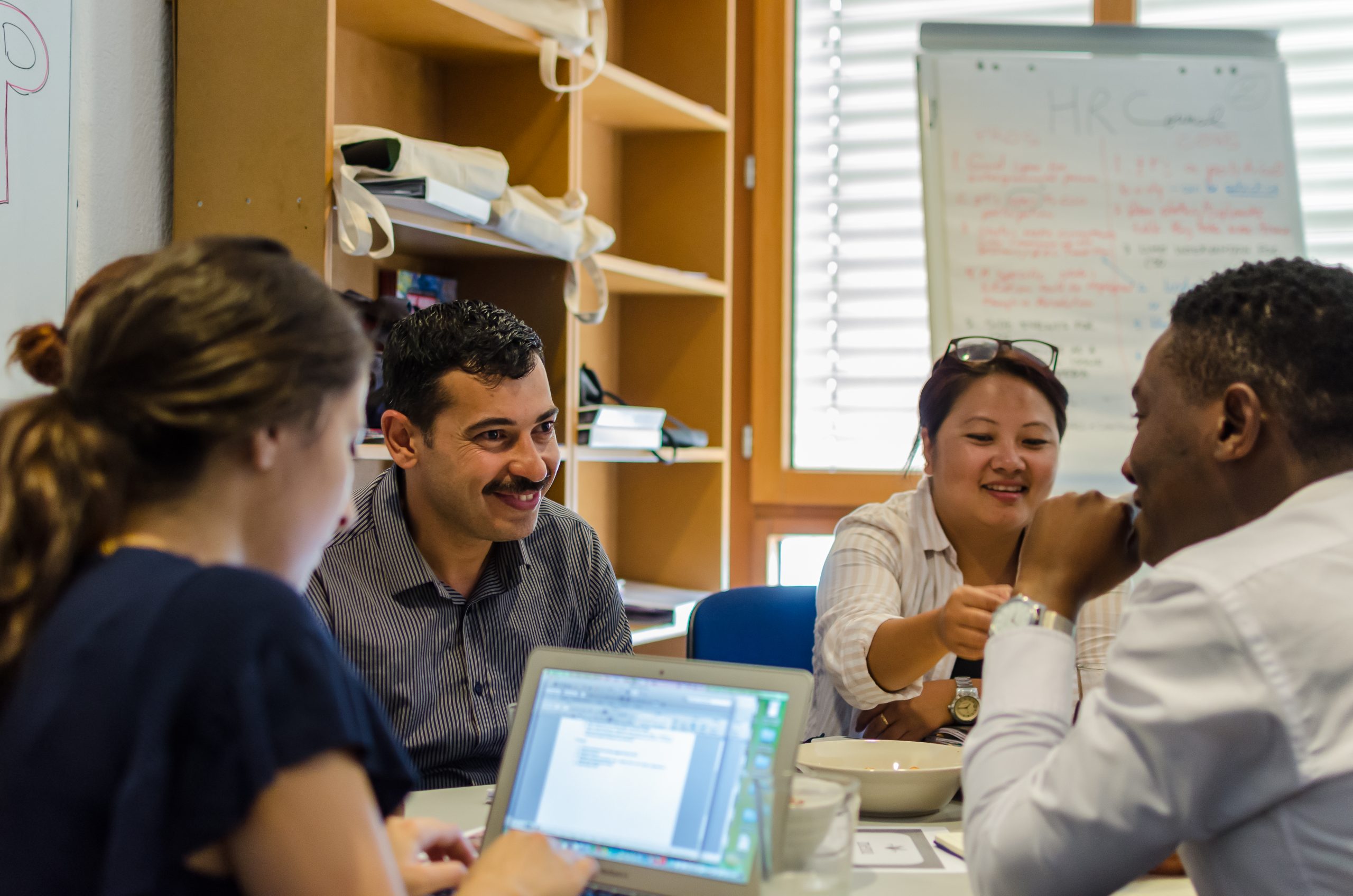
Du 7 au 19 mars 2010, le SIDH organise son cours de formation annuelle en français sur le système international des droits humains. Ce cours coïncide avec la 13ème session du Conseil des Droits de l’Homme, ce qui représente une opportunité unique pour les participant-e-s d’expérimenter le Conseil en action et d’entrer en relation avec des experts internationaux en matière de droits humains.
Le cours de formation en français s’adresse principalement aux défenseurs des droits de l’homme originaires de l’Afrique francophone. Il adresse les aspects théoriques et pratiques du système international des droits humains et de la participation de la société civile à ces mécanismes. Les sessions de formation utilisent divers outils pédagogiques tels que les jeux de rôle, les débats, les travaux de groupe, les présentations d’experts et les témoignages de participant-e-s.
Le cours compte environ 20 participant-e-s sélectionné-e-s minutieusement selon des critères bien précis. Les candidatures sont acceptées jusqu'au 10 décembre 2009.
Durant leur séjour à Genève, les participant-e-s sont tenu-e-s de développer un projet présentant une activité qui mettra en œuvre, dès leur retour, les acquis de la formation. Il s’agit typiquement d’un projet relatif à l’utilisation de l’un des mécanismes des Nations Unies, tel que la présentation d’un rapport à un organe de traité, l’envoi d’une communication à une des procédures spéciales, le dépôt d’une plainte individuelle, etc.
Télécharger le Formulaire d'inscription formation ISHR 2010 et l'Appel à candidatures formation ISHR 2010.
|
|
UN expert: human rights defenders face more restrictions on freedom of association in all regions |
|
|
|
|
Last Updated : Thursday, 12 November 2009
|
|
On 23 October 2009, the Special Rapporteur on the human rights defenders, Ms. Margaret Sekaggya (Uganda), called on States in the Third Committee of the General Assembly to do away with laws that required NGOs to register before they could operate. She was concerned that States were increasingly using security and counter-terrorism laws or more ‘subtle means’, such as the judiciary and public administration, to restrict, disrupt, and in some cases, ‘completely eliminate’ the work of human rights defenders. In order to give effect to the right to freedom of expression and association, States were also advised not to criminalise the activities of unregistered groups, or subject human rights defenders to baseless charges of slander or defamation.
In a departure from the common practise amongst UN special procedures, the Special Rapporteur chose not to refer to any countries by name in her report or her comments to the Third Committee. Whilst this very diplomatic approach might have found favour with States who do not wish to be publicly ‘named and shamed’, and may encourage others to be more open to cooperation with the mandate holder, some States were clearly not convinced of the merits of this approach. For example, during the interactive dialogue that followed, the UK raised concerns about the ‘repressive measures’ against civil society organisations in Iran and the Russian Federation; the US asked her to name the countries that imposed the greatest obstacles to human rights defenders; and several States asked her to identify best practice models.* In response, the Special Rapporteur encouraged States to use the universal periodic review process to identify model practices, given that all States were required to participate in it. She did not believe referring to offending States by name would improve the situation for human rights defenders.
|
|
Read more...
|
|
|
Yemen and Chad reviewed by UN treaty bodies in the absence of State delegations |
|
|
|
|
Last Updated : Thursday, 12 November 2009
|
|
The State reports of both Yemen and Chad were examined by the Committee against Torture and the Committee on Economic, Social and Cultural Rights respectively on 3 and 5 November 2009, in the absence of delegations from the State parties. For Chad in particular, 2009 has been an unfeasibly demanding year, being reviewed under the UPR and examined by five UN treaty bodies.
In the case of Chad, one representative of its Permanent Mission in Geneva attended the three hour session, all the members of the Committee expressed their regret and concern regarding the absence of the Chadian interlocutors. The Chairperson added that no strong explanation for the absence of the State was provided.
Before consideration of the report, Committee Chairperson Mr. Atangana stressed that under rule 62, paragraph 3 of the Committee’s rules of procedure, the delegation's failure to appear doesn't preclude the consideration of the State report. Thus, CESCR based its review on the report and the written replies by the Government of Chad to the list of issues, as well as on complementary sources of information, such as NGO reports.
|
|
Read more...
|
|
|
High Commissioner outlines priorities for next two years and defends special procedures |
|
|
|
|
Last Updated : Monday, 16 November 2009
|
|
On 21 October 2009, the High Commissioner for Human Rights, Ms Navanetham Pillay, engaged in a lengthy and constructive dialogue with the Third Committee of the General Assembly. In her statement, she highlighted key achievements during the first year of her mandate, such as the outcome document from the Durban Review Conference, and outlined six thematic priorities that would guide her work over the next two years:
1. eliminating discrimination on the grounds of race, sex, religion and other marginalised groups;
2. ensuring the human rights of migrants;
3. protecting economic, social and cultural rights to combat inequalities and poverty;
4. protecting human rights in armed conflict, violence and insecurity;
5. combating impunity and strengthening accountability, rule of law and democratic societies; and
6. strengthening international human rights mechanisms and the progressive development of human rights law.
|
|
Read more...
|
|
| |
|
|
Guidelines on the Protection of Human Rights Defenders |
|
Front Line is running a petition campaign to introduce Australian Guidelines on the Protection of Human Rights Defenders. View the petition.
|
|
|