|
|
|
GA adopts 60-plus Third Committee resolutions, including on Iran, North Korea and Syria |
|
|
|
|
Third Committee strives for relevance in context of Arab Spring
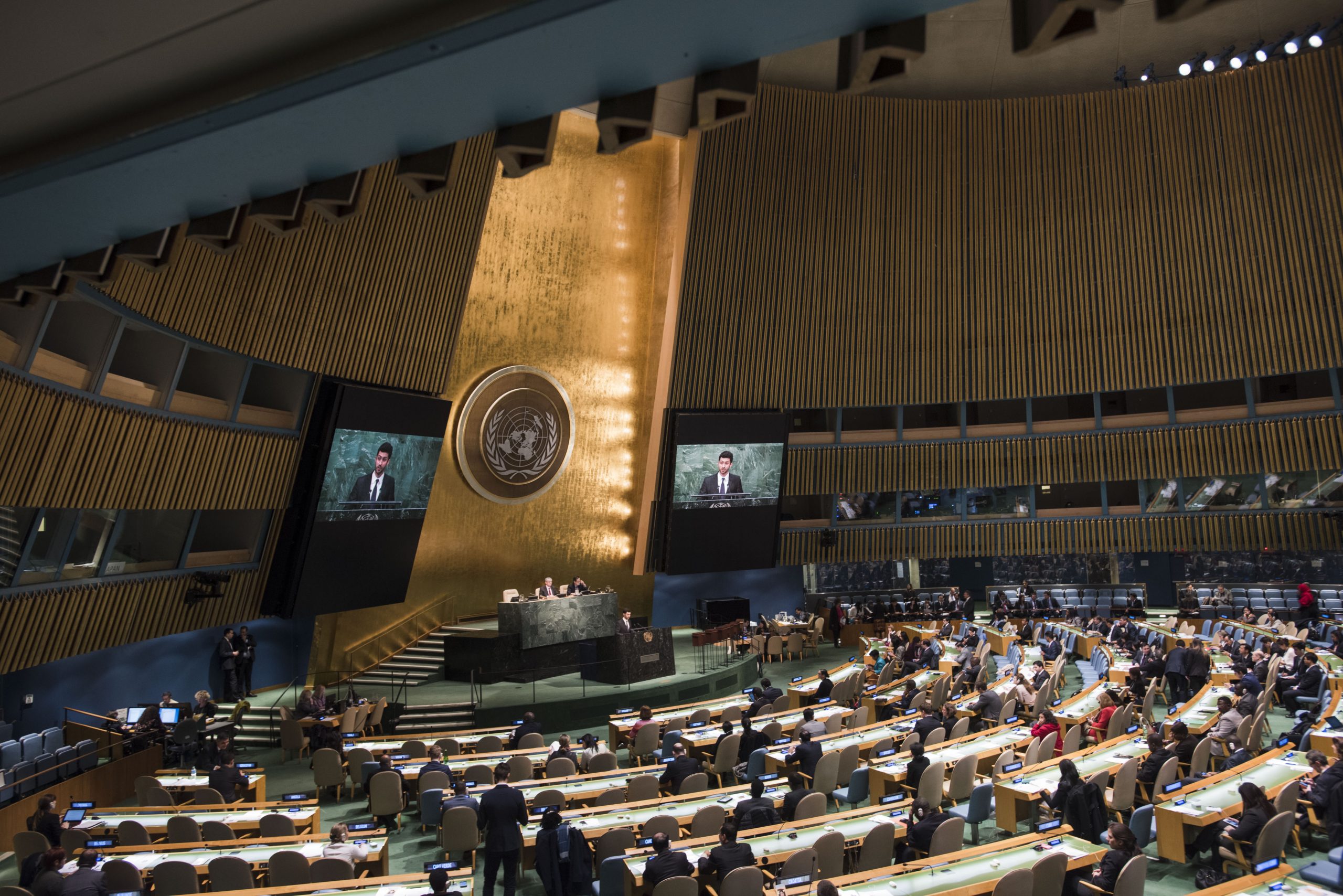
As the so-called ‘Arab Spring’ turned to summer and then to fall, the UN General Assembly’s Third Committee struggled but ultimately succeeded in giving a nod to the popular uprisings. Beyond the breakthrough resolution on the situation of human rights in Syria, which represented the first new country situation to be examined since 2007,[1] the Third Committee also referred to current events in a handful of thematic resolutions on human rights.
Despite sharp opposition, the bi-annual human rights defenders resolution[2] calls upon States to “ensure that human rights defenders can perform their important role in the context of peaceful protests” and refers between the lines to the role of social media by recognizing that “new forms of communication can serve as important tools for human rights defenders”. Though these timely references are notable achievements, it is regrettable that detractors were also able to gain additional references to the requirement that human rights defenders operate in the framework of national legislation in this year’s text. [3] By pushing to include such limitations, these States sought to restrict the role of defenders in peaceful protests rather than to protect and support their work.
This year’s resolution on torture[4] mentions current events by expressing deep concern at acts that can amount to torture and other cruel, inhuman or degrading treatment or punishment committed against “persons exercising their rights of peaceful assembly and freedom of expression”.
A resolution on women and political participation,[5] last seen at the General Assembly in 2003,[6] includes numerous references to situations of political transition. Despite staunch resistance from hardliners,[7] the US-sponsored resolution was adopted by consensus. Notably, the new language was supported by States currently undergoing significant transitions, including Egypt, Libya and Tunisia.
Finally, the bi-annual resolution on the role of the United Nations in enhancing periodic and genuine elections and the promotion of democratization included new preambular language highlighting the importance of fair, periodic and genuine elections in “new democracies and countries undergoing democratization.”[8]
General Assembly split on Human Rights Council report
Several recommendations in the Human Rights Council report[9] were addressed individually in separate resolutions by Third Committee, including the United Nations Declaration on Human Rights Education and Training[10] and the Optional Protocol to the Convention on the Rights of the child on a communications procedure.[11] Both standard setting instruments were adopted by consensus. In addition, the Committee considered a general resolution sponsored by the African group that generated a fair amount of controversy, as it has in previous years. The resolution (A/C.3/66/L.64/Rev.1) initially "took note” of the report of the Human Rights Council (Council) and “noted with concern some of the recommendations contained therein”. This was revised to "note the report … and some of its recommendations" and orally amended before the vote in Third Committee to "notes the report … and its recommendations." The changes reflected the African group’s decision to comply with behind-the-scenes requests from members of other regional groups that the resolution not send a negative message about the Council’s work.
At the request of Belarus,[12] the draft general resolution on the Council report was put to a vote in the Third Committee and adopted with 94 in favour, to 3 against (Belarus, Syria and DPRK), with 62 abstentions.[13] Most states in the Western Europe and Other Group (WEOG) except Turkey abstained, with most statements expressing that the plenary—and not the Third Committee—should consider the report. Eastern European countries also abstained with the exception of Belarus, who voted against, and the Russian Federation and Armenia, who voted in favour. In addition to the African Group, overwhelming support came from the Asian Group and the Latin American and Caribbean Group (GRULAC) countries,[14] providing a clear North versus South divide to the voting pattern. Many statements on YES votes qualified their position by citing the politicisation and double standards within the Council, particularly the issue of country specific resolutions.[15]
Ongoing debates on sexual orientation and gender identity (SOGI) also surfaced in the discussions on the HRC report resolution in Third Committee and the General Assembly plenary. In Third Committee, Russia and Pakistan expressed concern at the Council’s request that the United Nations High Commissioner for Human Rights to commission a study and convene a panel on discriminatory laws and practices and acts of violence against individuals based on their SOGI. On the other side, Israel and the US voiced support for the initiative on SOGI taken by the Council in HRC/RES/17/19. In the plenary, the African Group and the Holy See also registered their concern about the Council’s resolution on ‘sexual preferences’ and ‘undefined’ notions such as SOGI.
Two resolutions threaten mandate of Special Representative on Children and Armed Conflict
This session of the Third Committee saw a number of new initiatives, including a resolution put forward by Thailand on “Strengthening of the coordination of the United Nations system on child protection”.[16] This initiative was widely viewed as a rebuke of the Special Representative of the Secretary-General for Children and Armed Conflict, Radhika Coomaraswamy, for mentioning Thailand in the annual report of the Secretary-General on Children and Armed Conflict.[17] Framed by Thailand as an initiative to strengthen the UN child protection system, the resolution came across to many states and NGOs as a thinly veiled attempt to undermine the independence of UN mandate holders working on child protection[18] through a new evaluation mechanism and a focal role for UNICEF in coordination.
In the end, a much watered-down text was adopted by consensus. A number of states[19] expressed concern at the duplicitous intent of the resolution and clarified their interpretation that, where the resolution calls for mandate holders “to continue to exercise their functions in a fully independent manner and to act in full observation of their respective mandates”, that the "continue to" applies to the second part of the sentence as well, i.e. that mandate holders have been and will continue to observe their mandates. This reading reinforces the notion that Ms Coomaraswamy’s decision to include and scrutinize Thailand in her annual report is fully in line with her mandate.
The controversy also spilled over into the rights of the child resolution, in which the initial draft “took note with appreciation” of Coomaraswamy’s work and extended her mandate for a further four years. However, the sponsors of the resolution succumbed to pressure from Thailand and other states that objected to the mandate being extended beyond the usual three years. The draft was later revised to merely “recognize” the work of her office and to recommend that her mandate be renewed for three years only. Despite these concessions, Pakistan proposed an amendment in Third Committee to “reiterate that it is incumbent upon all mandate holders to perform their functions in strict observance of their mandates upholding the principles of impartiality, objectivity and non-selectivity as well as avoiding politicization.” The amendment was defeated by a vote of 78 against to 48 in favour, with 21 abstaining. The resolution was later adopted without a vote by the General Assembly plenary.
General Assembly maintains Council gains by dropping defamation of religion text
The General Assembly did not adopt a text this year on the defamation of religions, in line with the breakthrough in the March 2011 session of the Council when the Organisation of Islamic Cooperation (OIC) decided not to run its polarizing resolution on the topic. Instead, the General Assembly adopted by consensus an OIC-sponsored text[20] similar to the one put forth at the March 2011 Council session on combating intolerance and incitement to violence against persons based on their religion or belief, [21] which has no references to the defamation of religion.
The new OIC-sponsored General Assembly resolution requests the UN Secretary-General to submit a report at its sixty-seventh session on steps taken by States to combat intolerance. It also calls on States to consider reporting to the Office of the High Commissioner for Human Rights (OHCHR) on their efforts to combat religious intolerance, stereotyping and violence.
As in previous years, the General Assembly also adopted an EU-led resolution on religious intolerance.[22]
Europeans soften positions on follow up to Durban
This year’s resolution on the “Global efforts for the total elimination of racism, racial discrimination, xenophobia and related intolerance and the comprehensive implementation of and follow-up to the Durban Declaration and Programme of Action” prompted a significant change in the voting pattern among European states. The following states switched their votes from NO to Abstain: Bulgaria, Czech Republic, Denmark, Estonia, Germany, Italy, Latvia, Lithuania, Netherlands, Poland, Romania, Slovakia, Sweden, The Former Yugoslav Republic of Macedonia, and United Kingdom. Switzerland, Iceland, Liechtenstein and Norway changed from abstaining to voting in favour. The final vote in the General Assembly was 138 in favour to 6 against (Australia, Canada, Israel, Marshall Islands, Palau, and United States), with 46 abstentions. This was reportedly the result of concerted engagement by South Africa and Argentina (on behalf of the G77) to work with European states on the text. The G77 took on a number of their concerns, including explicitly mentioning the primary responsibility of States in the fight against racism. However, the EU did not ultimately support the text as several operative paragraphs -- related to incitement and to the media --included restrictions on the freedom of expression not in line with international law.
Country-specific resolutions
Despite ‘in principle’ objections raised by the Non-Aligned Movement (NAM) and others (DPRK, China, Kazakhstan) to the consideration of any country specific resolutions by the Third Committee, the General Assembly this year adopted four country-specific texts. The vote in the General Assembly plenary on the Democratic Peoples’ Republic of Korea (DPRK) resolution was 123 in favour, 16 against with 51 abstaining; on Iran was 89 in favour, 30 against with 64 abstaining; and on Syria was 133 in favour, 11 against, with 43 abstaining. The text on Myanmar, which was adopted by vote in the Third Committee, was deferred pending review of its programme budget implications by the Fifth Committee. The resolution has costs associated with political missions and good offices. In all cases, the votes in favour of the resolutions increased from Third Committee.[23] ISHR published an earlier article analysing the voting patterns of the resolutions in Third Committee.[24]
Comparing this year’s General Assembly Plenary votes to last year’s, the resolution on Iran gained 11 additional YES votes and the resolution on the DPRK gained an additional 17. The margins also increased significantly for both Iran (from 33 to 59) and the DPRK (86 to 107).
NO votes continued to decrease in the Non-Aligned Movement (NAM) in all cases, despite continued statements on its principled position against country-specific resolutions in the Third Committee.More than half (62) supported the resolution on Syria.
Only the resolution on Syria faced a no-action motion in the Third Committee, which was defeated by an overwhelming majority of 118 to 20, with 29 abstentions. Only the resolution on Iran faced a no-action motion in the General Assembly Plenary, which was defeated 100 to 35 with 42 abstaining.
The resolution on Syria passed with the largest margin of YES to NO votes (122) compared to DPRK (107), and Iran (59). The vote on Syria was marked by strong regional support with Bahrain, Jordan, Kuwait, Morocco, Qatar and Saudi Arabia cosponsoring. No Arab country voted against the resolution. Russia and China, who vetoed the earlier Security Council resolution on Syria, abstained from the vote despite voting against all other country-specific resolutions. Between the Third Committee and the General Assembly Plenary, Bolivia and Vietnam changed their votes from NO to Abstain and six countries changed their votes from Abstain to YES.[25] No country changed their votes from YES/Abstain to NO but Chad and Mauritania changed their votes from YES to Abstain.
This year’s resolution on Iran includes additional language on the continuing and systemic targeting of human rights defenders and calls on Iran to allow access to the newly appointed Special Rapporteur on human rights in Iran. In addition, this year’s resolution calls on the Government to release all those arbitrarily arrested and detained for exercising their right to peaceful assembly and participating in peaceful protests. The resolution also strongly urges the Government to ensure free, fair, transparent and inclusive parliamentary elections in 2012 and calls on the Government to allow independent observers, but stops short of calling for international observation.
The resolution on Myanmar was softened this year, reflecting recent developments such as talks between the Government and Daw Aung San Suu Kyi and the release of prisoners of conscience. The resolution welcomed a number of positive steps by the Government, acknowledged commitments made by the President to implement reform, and encouraged the continued cooperation of the Government with the international community. However, NGOs remained concerned that the text fell short of calling for an independent, international investigation into grave crimes that would determine the facts and hold perpetrators accountable.[26]
Mirroring the themes focused on by the Special Rapporteur on the situation of human rights in the DPRK in his report and statement to the Third Committee, this year’s text on the DPRK places greater emphasis on the issues of food security, the reuniting of families, and the protection of asylum seekers. The resolution also reiterates serious concern at the refusal of the Government to articulate its position on which recommendations included in the outcome report of its universal periodic review in March 2010 enjoy its support, and regrets the continuing lack of action to implement the recommendations contained in the report.
See further analysis of the voting patterns for the DPRK, Iran and Syria.
Other developments
The General Assembly also adopted numerous other resolutions recommended by its Third Committee, including on the girl child, people with disabilities, indigenous issues, national human rights institutions, counter terrorism and human rights, and the interdependence of human rights.
An analytical article covering this year’s General Assembly Third Committee session will be available in the January 2012 edition of the Human Rights Monitor Quarterly.
[1] The last time the Third Committee considered a new country situation was in 2007 when it passed a resolution on the situation of human rights in Belarus A/RES/62/169. Since then, the Committee has only considered resolutions on Iran, Myanmar and the Democratic Peoples’ Republic of Korea.
[7] Syria, Russia, China, Cuba, Yemen, Venezuela, Pakistan, Iran, Nicaragua, Belarus, Vietnam.
[9] A/66/53(Supp.) This year's annual report before the General Assembly covers the 16th and 17th regular sessions as well as the 14th, 15th, 16th and 17th special sessions. The addendum (A/66/53/Add.1) to the report covers the 18th regular session. The Council’s annual reporting cycle was previously 1 July to 30 June. During the Review of the Human Rights Council, concluded in June 2011, States decided that the new reporting cycle would run from 1 October to 30 September, thus ensuring that the September session is included in the report to the General Assembly.
[12] Belarus was the subject of a county-specific resolution at the Human Rights Council in June 2011.
[13] DRC and Iraq changed their respective NO and YES votes to Abstain after the vote. Last year the report was adopted by a vote of 123 in favour, to 1 against (Israel), with 55 abstentions. The report was adopted by consensus in 2009.
[14] Exceptions include Honduras and Panama, who abstained.
[15] In the General Assembly, the voting patterns across regions were similar though more states voted in favour of the resolution, and less abstained (122 in favour, to 3 against, with 59 abstentions).
[18] The resolution cited specifically “[t]he Special Representative of the Secretary-General on Violence against Children, the Special Representative of the Secretary-General for Children and Armed Conflict, the Special Rapporteur on the right to education, the Special Rapporteur on trafficking in persons, especially women and children, the Special Rapporteur on the sale of children, child prostitution and child pornography and other relevant actors”.
[19] The US, Norway on behalf of Lichtenstein and Switzerland, Poland on behalf of the EU, Costa Rica and Chile.
[23] The vote on Syria went from 122YES:13NO:41Abst in Third Committee to 133 YES:11NO:43Abst in General Assembly Plenary; The vote on Iran went from 86 YES:32NO:59Abst in Third Committee to 89YES:30NO:64Abst in General Assembly Plenary; The vote on the DPRK went from 112YES:16NO:55Abst in Third Committee to 123YES:16NO:51Abst in General Assembly Plenary.
[25] Antigua & Barbuda, Comoros, Congo, Dominican Republic, Grenada, Thailand.
|
|
Last Updated on Thursday, 22 December 2011 12:46 |
|
Third Committee Update: Analysis of Voting on Country-Specific Resolutions |
|
|
|
|
The Third Committee of the General Assembly took up four country-specific resolutions on human rights this year: Myanmar, Iran, the Democratic People’s Republic of Korea (DPRK) and for the first time, Syria. ISHR will be publishing an analytical overview on the substance of the resolutions but in the meantime has produced the following analysis of voting.
The vote results are as follows:
Only the resolution on Syria faced a no-action motion, which was defeated by an overwhelming majority of 118 to 20, with 29 abstentions.
The resolution on Syria passed with the largest margin of YES to NO votes (109) compared to DPRK (96), Myanmar (73) and Iran (54).
The vote on Syria was marked by strong regional support with Bahrain, Jordan, Kuwait, Morocco, Qatar and Saudi Arabia cosponsoring. No Arab country voted NO. Russia and China, who vetoed the earlier Security Council resolution on Syria, abstained from the vote despite voting NO on all other country-specific resolutions.
In every case, YES votes increased compared to previous years. Comparing this year’s Third Committee votes to last year’s General Assembly plenary votes, the greatest increase in YES votes was on Myanmar, which gained an additional 13 YES votes, followed by Iran, which gained 8 and the DPRK, which gained 6.
Comparing votes on country-specific resolutions from previous years, significant changes include:
- Malaysia’s consistent shift from NOs to abstentions;
- Libya’s consistent shift from NOs to YES votes;
- Tunisia’s consistent shift from NO or being absent to YES votes;
- Egypt’s shift from consistent NO votes to voting YES on Syria, and abstaining on Iran;
- Kyrgyzstan’s shift from consistent NO votes to voting YES on the DPRK and abstaining on Myanmar and Iran.
Comparing recent relevant resolutions at the Human Rights Council (HRC) on country situations, generally states that voted in favour of resolutions at the HRC maintained their votes at the Third Committee, with the following exceptions:
- 2 states that voted in favour of the Human Rights Council resolution creating the mandate of the Special Rapporteur on Iran abstained in the Third Committee (Brazil, Guatemala);
- 4 states that voted in favour of the Human Rights Council resolution on the DPRK abstained in the Third Committee (Burkina Faso, Guatemala, Thailand, and Zambia);
- With regard to the Human Rights Council Resolution S-16/1 on Syria, Gabon and Mauritania switched their vote from NO to YES, and Nigeria, Saudi Arabia and Ukraine changed their vote from Abstain to YES. Bangladesh, China, Malaysia, Pakistan and the Russian Federation all changed their votes from NO to Abstain. Unfortunately Ghana and Zambia changed their votes from YES to Abstain.
- With regard to the Human Rights Council Resolution S-17/1 on Syria, Mauritania changed their vote from Abstain to YES, Congo and Thailand switched from YES to Abstain, while the Russian Federation and China changed their vote from NO to Abstain.
States in the Latin American and Caribbean Group (GRULAC) were again split this year between voting YES and abstaining. A majority (21) voted in favour of the resolution on Syria. The GRULAC states traditionally against country resolutions maintained their usual NOs or abstentions (Cuba, Ecuador, Nicaragua, Venezuela, and Bolivia) and all voted NO on Syria.
NO votes continued to decrease in the Non-Aligned Movement (NAM) in all cases, despite continued statements on its principled position against country-specific resolutions in the Third Committee. Nearly half (56) supported the resolution on Syria.
A more complete analysis of the votes for each resolution, including how votes changed from last year and a breakdown of votes by regional and other groups can be accessed here for Iran, Myanmar, the DPRK and Syria. A short summary of statements made during the adoptions is also included.
Click here for a table showing votes on country-specific resolutions in Third Committee by region
|
|
Last Updated on Tuesday, 20 December 2011 23:20 |
|
President of the Human Rights Council declares“The Council is everybody’s Council” |
|
|
|
|
On 2 November 2011, the Human Rights Council (the Council) President, Ambassador Laura Dupuy Lasserre, presented her report to the General Assembly (GA) Third Committee in New York. Following her presentation, the Third Committee engaged in the first-ever interactive dialogue with a Human Rights Council President.
In her statement, the President highlighted the Council’s key achievements over the past year: the conclusion of the first cycle of the universal periodic review (UPR) process; the completion of a review on the Council’s work and functioning in accordance with General Assembly Resolution 60/251;[1] and increased interaction with the Office of the High Commissioner for Human Rights (OHCHR). In addition, the Council had shown its ability to respond to human rights crises, including through the undertaking of four special sessions on human rights crises (Cote d’Ivoire, Libya and two on Syria) and the use of commissions of inquiry and fact finding missions.
A key message was to urge the General Assembly to adequately fund the Council’s work, and the universal periodic review (UPR). Despite its success, the UPR is severely underfunded, and the President requested that States provide the necessary financial and human resources to support the extension of review time in the second cycle.[2] Ambassador Dupuy further called on the General Assembly to ensure that funds are made available to implement Council resolutions, in particular decisions related to urgent measures.
The interactive dialogue that followed the presentation of the report covered, inter alia, the Council’s accomplishments and challenges; coordination between New York and Geneva, the Council’s resource requirements; and the importance of economic, social and cultural rights in the Council’s work. States also raised similar issues in the Third Committee general debate on the Council report (which followed the interactive dialogue), and in the General Assembly plenary debate (which took place later the same day).
Many States welcomed the interactive dialogue, calling the Third Committee an appropriate forum for consideration of the Council’s work (Russia, Morocco, African group). Costa Rica, preferred that the Council’s report be presented first within the plenary, and after in the Third Committee, while Liechtenstein noted that not all decisions related to the report fall within the Third Committee’s mandate.
Many States acknowledged the Council’s achievements particularly the completion of the UPR cycle and the review process. Overwhelming support for the Council’s work and the president’s role in steering the Council came from the Group of Latin America and Caribbean Countries (GRULAC); this came as no surprise given that the Presidency is currently held by Uruguay. The EU, US and Israel welcomed the country-specific action taken by the Council to address human rights crises. Several members of the Non-Aligned Movement (NAM) were concerned that double standards pervaded the Council, and that the Council was becoming a political tool. Instead cooperation and coordination should underpin all work (Malaysia, Egypt, Syria, Cuba, the Russian Federation and China). Mexico noted polarisation within the Council and asked how to create a constructive dialogue so differences do not lead to confrontation. Egypt, Malaysia and Nigeria stressed the importance of economic, social and cultural rights in the work of the Council.
During the general discussion on the Council report, the role of special procedures was raised. Indonesia and Malaysia appealed for further examination of their roles and work in order to avoid duplication. The Caribbean Community (CARICOM) and Indonesia expressed concern that mandate holders are exceeding their mandates and reiterated that the special procedures must respect the Code of Conduct. Ukraine emphasised that there must be further enhancement in transparency in the nomination of mandate holders.
Several States responded to Ambassador Dupuy’s call for rapid funding to support Council decisions.[3] Several States recognised that the General Assembly needed to further discuss the establishment of measures for financing unforeseen and extraordinary expenses arising from Council resolutions and decisions (the African group, Malaysia, Senegal). Switzerland, Liechtenstein, Costa Rica, and Chile expressed support for establishing a mechanism for unforseen and emergency needs.
Other topics raised included coordination and cooperation between the Council in Geneva and other UN bodies in New York (Liechtenstein, EU); the implementation of human rights throughout the UN system (Australia and Switzerland), and human rights violations in the context of the establishment of emergent democracies (US).
Responding, Ambassador Dupuy noted that democratic transitions are an important opportunity to examine human rights at the national and international level. Special procedures can play an important role through producing thematic recommendations and country specific recommendations. All UN members should support democratic processes which clearly emanate from popular demand and a calling for the realisation of human rights.
Ambassador Dupuy reaffirmed that the current 44 mandate holders must continue to work in an independent manner and abide by the Code of Conduct. Primarily they must respect human rights and the UN Charter, promote dialogue with States and focus on broad based consultation.
Ambassador Dupuy hoped to raise the Council’s profile and enhance cooperation and coordination through presenting her report to the General Assembly, participating in more events and panels, and increasing the number of video messages sent to New York.
On the issue of polarisation and politicisation within the Council, the President stated that the Council always strives to engage in a constructive dialogue. She also reminded delegates that they must take initiative in this respect. The President cited the UPR process as evidence, as the human rights situation in every country is reviewed every four years with no selectivity. Further, the UPR should be viewed as a valid and constructive process. States should not invalidate recommendations just because they come from a developing or developed country. Constantly referring to comments as politically fuelled can be very damaging. Rather the “the Council is everybody’s Council.” Ambassador Dupuy also addressed the issue of politicisation in the context of country-specific situations. She stated it was unrealistic to adopt 193 resolutions each session on every single UN member state and that the aim of country resolutions is to help countries reflect internally. She also emphasised that human rights violations in developed countries are examined from a thematic angle, giving the example of migrants in Europe.
The President continually stressed the Council’s focus on cooperation. Cooperation means that States should request help when they need it, but cooperation also means not countering the Council’s work. In particular, reprisals should not be carried out against those who cooperate with the Council.
The meeting coverage provided by the United Nations is available here for the Third Committee and here for the plenary.
[1] In this context, she noted that momentum had been created towards a “review by doing” process using the toolkit already established by the Council’s institutional building package.
[2] A key change in the UPR process is that the four year cycle will move to a four and half year cycle, extending each review by half an hour.
[3]This occurred duing the Third Committee interactive dialogue with the President, and in the General Assembly plenary discussion.
|
|
Last Updated on Sunday, 20 November 2011 17:21 |
|
Special Rapporteur on freedom of expression discusses internet access with General Assembly |
|
|
|
|
On 21 October 2011, the Special Rapporteur on the right to freedom of opinion and expression, Mr. Frank La Rue, presented his report to the General Assembly's Third Committee.[1] The report explores trends and challenges to the right of all individuals to seek, receive and impart information and ideas through the internet. In his oral statement, Mr. La Rue addressed this issue through two dimensions of internet access: access to online content and access to internet connection.
The Special Rapporteur highlighted the importance of the internet in enabling people to access diverse forms of information, which can provide them with enhanced knowledge, and enable them to participate in the democratisation process of their countries. Despite these positive effects, Mr. La Rue raised concerns about the use of increasingly sophisticated tactics to censor internet content, and the arbitrary arrests and detention of individuals who express critical opinions in some countries. He urged all States to maintain the free flow of information and ideas on the internet and to ensure that the internet is made widely available, accessible and affordable.
Contributing to the ongoing debate on what types of content should be restricted on the internet, the Special Rapporteur highlighted differences between illegal content and content that is considered harmful, offensive, objectionable, or undesirable. He also shared best practices of countries implementing the right to access of information in an effective manner, including Brazil, Uruguay, Sweden and Botswana.
A dynamic dialogue followed the Special Rapporteur’s presentation. The European Union (EU), the Czech Republic, Sweden, and Switzerland stressed the link between the exercise of the freedom of assembly and expression and a free and accountable democratic society. Switzerland underscored the pivotal role of the internet in times of demonstrations, stating that broad access to the internet can enable citizens to exercise their voice, which contributes to holding government to account. The Czech Republic raised concerns about advocates and bloggers as targets of reprisals, and asked for Mr. La Rue’s views on bans and sanctions especially during elections. Sweden lamented the censoring of internet content, and looked forward to a Human Rights Council panel in 2012 that would discuss the issue.[2]
|
|
Last Updated on Friday, 11 November 2011 16:29 |
|
Read more...
|
|
Special Rapporteur on extrajudicial killings addresses use of force, legality of targeted killings |
|
|
|
|
On October 20, 2011 Mr Christof Heyns (South Africa), the Special Rapporteur on extrajudicial, summary or arbitrary executions, addressed the Third Committee of the General Assembly in New York. His statement summarized the key points of his August 2011 report to the General Assembly. The main topic of his address was the use of excessive force in law enforcement, resulting in arbitrary and often unlawful loss of life. A secondary theme, which resonated with a number of States during the interactive dialogue, was the “right to life” issues raised by targeted killings in the form of drone attacks.
On the latter issue, much of the Special Rapporteur’s statement addressed the United States’ use of targeted killings in operations in the Middle East. Without specifically identifying the events, Mr Heyns was clearly concerned with the legality of military operations resulting in the death of Osama bin Laden and other Al Qaeda leaders. Mr Heyns stated that situations in which a target in a foreign country is identified in advance and a decision to kill the person is later implemented by the military at an opportune moment, raise a number of issues under humanitarian law. He emphasised that a State carrying out a targeted killing does not have the justification of the right to self-defence unless an attack is “imminent”, a condition that the SR reported to be rarely met. Equally problematic is the fact that targeted killings do not afford an opportunity for the target to surrender or be taken prisoner.
The United States took the opportunity during the interactive dialogue to state, in concrete terms, that the operation that killed bin Laden was not a rejection of any Conventions of humanitarian or human rights law. In addition, the United States “strongly disagreed” that the operation ruled out the option of surrender, underscoring that the applicable standard under the laws of war requires a clear communication of surrender where it is feasible to accept the offer. According to the US, such was not the case in the bin Laden operation. Regarding drone strikes, the United States underlined that it did not approach its campaign in Afghanistan recklessly, indicating that the prioritization of the avoidance of incidental injuries, the recognition of international legal principles, respect for state sovereignty, and a case-by-case approach provided necessary constraints on operations in the region.
In response, the Special Rapporteur pointed to media reports indicating that 6000 people have already been killed in drone strikes. Without an international formulation on the use of drones in targeted killings, Mr Heyns warned that it could result in “unlimited war” where sovereignty is not respected and anyone can be determined to be a target. In light of the paradigm shift presented by asymmetrical warfare, the Special Rapporteur urged the international community to engage in a stock-taking to determine how to deal with the problem of drone operations.
Brazil, the European Union (EU), and Lichtenstein asked questions on the use of excessive force in law enforcement. In response to Brazil and the EU’s inquiries regarding modern technology and the effort to stem the use of excessive force, the Special Rapporteur cited the effectiveness and availability of digital video. By employing video cameras in arrest and protest scenarios, law enforcement and citizens are able to provide unimpeachable evidence of events. Mr Heyns added that video records of events also promote accountability – “if there is a camera, there is accountability.”
In response to a question by the EU on drivers behind the excessive use of force and accountability, Mr Heyns stated that a culture of impunity is the single greatest factor in the application of excessive force by law enforcement. He mentioned that it is crucial to put an end to the culture of silence and mutual protection prevalent within the police community, as well as to encourage prosecutors to tackle the problem. He also recommended that states avoid using elite and specially trained units that do not answer to normal power structures.
Lichtenstein asked the SR how best to ensure accountability when States are either unable or unwilling to pursue accountability for extrajudicial killings, and are not party to the International Criminal Court (ICC). Lichtenstein made specific mention of Syria and Sri Lanka in this regard. The Special Rapporteur responded that a whole range of responses might be employed when dealing with a non-responsive State, including a referral by the Security Council to the ICC, as was the case with Libya. Alternatively, Mr Heyns put the onus on the international community to conduct investigations into allegations of extrajudicial killings if local investigations fail to comply with international standards. Syria responded, objecting to Lichtenstein’s identification of Syria in its comments and affirming that it is against all forms of extrajudicial and summary executions.
The Special Rapporteur mentioned that his next report to the Human Rights Council will deal with the protection of the right to life of journalists and his next address to the General Assembly will deal with aspects of the death penalty.
The meeting coverage provided by the United Nations is available here. |
|
Last Updated on Thursday, 10 November 2011 23:03 |
|
|
|
<< Start < Prev 1 2 3 4 5 6 Next > End >>
|
|
Page 1 of 6 |
|
More Latest News & Documents
|